
Gum Arabic, also known as Acacia gum, is a natural exudate from Acacia trees, highly valued globally for its food, pharmaceutical, and industrial applications. Nigeria is one of the world’s largest producers, making gum Arabic a high-value non-oil export commodity.
1. What Is Gum Arabic and Why Is It Important?
Gum Arabic is a natural water-soluble gum obtained from Acacia senegal and Acacia seyal trees. It is prized for its binding, stabilizing, and emulsifying properties.
Key Uses
-
Food and beverages (soft drinks, confectionery, bakery)
-
Pharmaceutical products (syrups, capsules, emulsifiers)
-
Cosmetic formulations
-
Industrial applications (adhesives, inks, textiles)
-
Printing and paint industries
Health & Nutritional Benefits
-
Low-calorie dietary fiber
-
Prebiotic properties for gut health
-
Supports healthy digestion
2. Why Export Gum Arabic from Nigeria?
Nigeria’s Export Advantage
-
Largest producer and exporter in Africa
-
Competitive production costs
-
High-quality, natural grades suitable for international standards
-
Strategic location for export to Europe, North America, and Asia
Nigeria accounts for a significant share of global gum Arabic exports, supplying both food and industrial markets.
3. Major Gum Arabic Producing Areas in Nigeria
Gum Arabic is predominantly harvested in northern Nigeria:
-
Kano State
-
Kebbi State
-
Sokoto State
-
Yobe State
-
Bauchi State
-
Gombe State
These regions provide semi-arid savannah conditions ideal for Acacia trees.
4. Export Grades and Forms of Gum Arabic
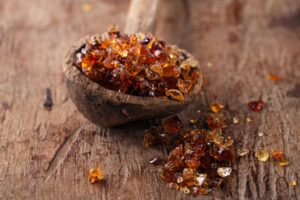
Whole Crystals / Chips
-
Natural raw gum
-
Used in food and industrial applications
Powdered / Processed Gum
-
High-value form for food and pharmaceutical industries
Solution / Liquid Form
-
Used in beverages, confectionery, and industrial processes
Specialty Grades
-
Food-grade (E414)
-
Industrial-grade
5. Quality Standards for Export
International buyers expect:
-
Pure, natural gum with no additives
-
Moisture content: ≤ 12%
-
Free from sand, dust, and foreign matter
-
Color: pale to light amber for food-grade, darker acceptable for industrial-grade
-
Soluble in water and non-toxic
Compliance with ISO 9001, GMP, and food safety standards enhances market acceptance.
6. Packaging for Gum Arabic Export
Bulk Packaging
-
Jute bags (25–50kg) with food-grade liners
-
Polypropylene (PP) bags for industrial buyers
Retail Packaging
-
Sealed plastic containers
-
Foil packs for processed or powdered gum
Labeling should include:
-
Product name and grade
-
Net weight
-
Country of origin (Nigeria)
-
Exporter details
-
Batch/lot number
7. Export Documentation Required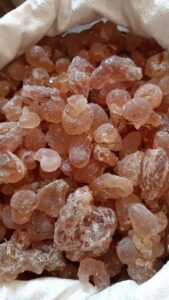
To export Gum Arabic from Nigeria:
-
CAC Registration Certificate
-
NEPC Exporter Certificate
-
NXP Form
-
Phytosanitary Certificate (NAQS)
-
Certificate of Origin
-
Commercial Invoice
-
Packing List
-
Bill of Lading / Airway Bill
-
Fumigation Certificate (if required)
Optional certifications:
-
Organic certification
-
HACCP / ISO 22000
8. Step-by-Step Export Process
-
Register your export business (CAC & NEPC)
-
Source high-quality gum Arabic from licensed suppliers or farmers
-
Clean and grade the gum
-
Conduct quality inspection and testing
-
Package according to buyer requirements
-
Process export documentation
-
Ship to international buyers
9. Major Global Markets
-
Europe: UK, Netherlands, Germany, France
-
North America: USA, Canada
-
Asia: China, India, Japan
-
Middle East: UAE, Saudi Arabia
The food, pharmaceutical, and beverage industries are the primary importers.
10. Challenges in Gum Arabic Export
-
Price fluctuations due to climate and supply variations
-
Quality inconsistencies among small-scale producers
-
Moisture and contamination risks during storage
-
Compliance with strict EU and US food safety regulations
11. Tips for Successful Export
-
Source from certified suppliers for consistent quality
-
Maintain proper moisture control
-
Invest in grading, cleaning, and packaging facilities
-
Explore value-added products (powdered or liquid gum)
-
Target high-demand markets with premium pricing
Conclusion
Gum Arabic export from Nigeria offers a high-margin, globally demanded, and sustainable non-oil export opportunity. With quality control, certification, and market targeting, Nigerian exporters can maintain a strong presence in international food, pharmaceutical, and industrial markets.